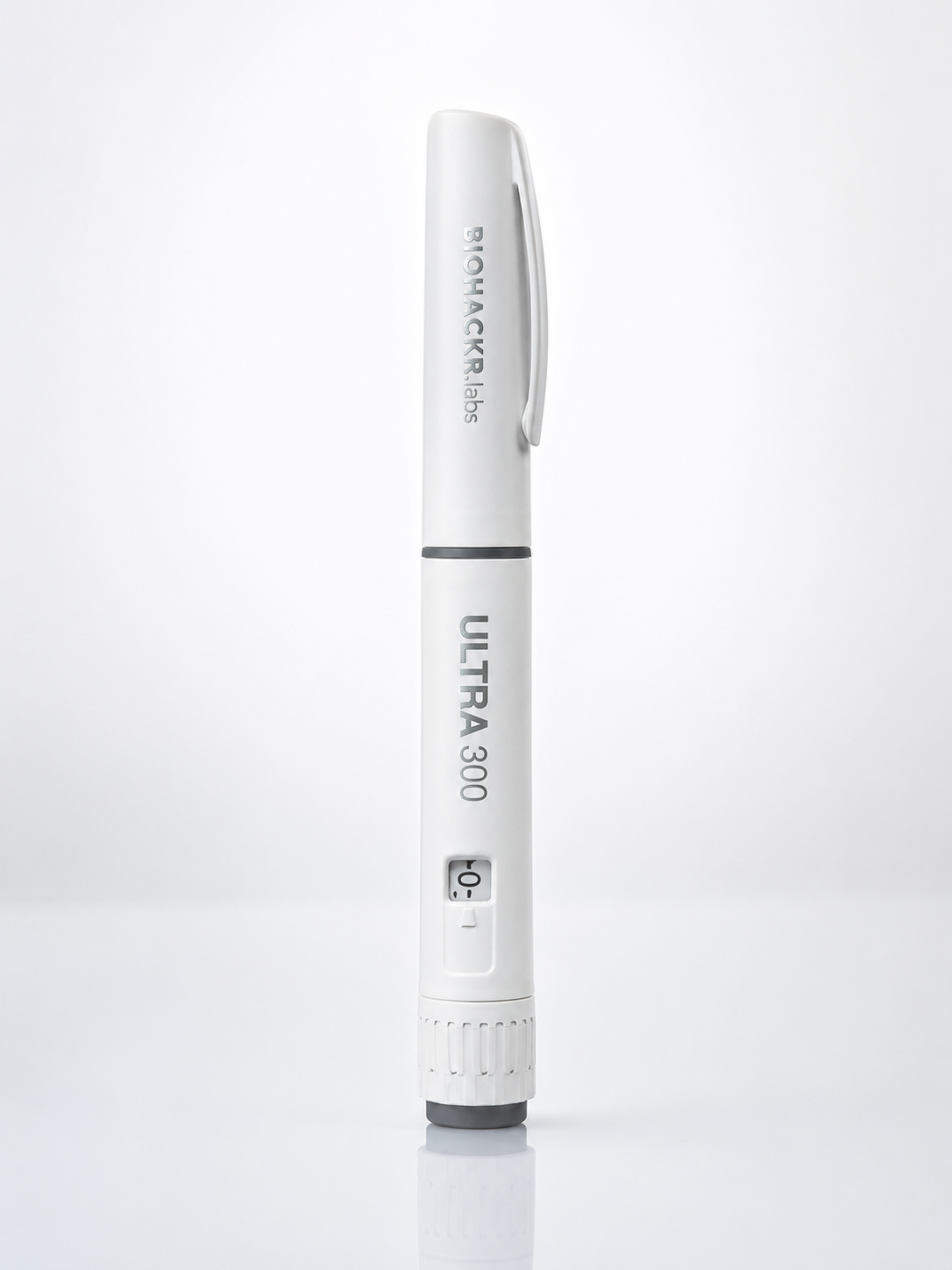
Most conversations about erectile function focus on what happens — the visible result. This article focuses on the mechanism underneath it: the anatomy, the neurovascular cascade, where it breaks down, and why intracavernosal administration bypasses the limitations of systemic oral treatment at every step.
The anatomy — what you are working with
The penis contains two parallel cylindrical chambers called the corpora cavernosa, running the full length of the shaft side by side. Each corpus cavernosum is a sponge-like structure lined with smooth muscle and divided into thousands of sinusoidal spaces — lacunar chambers that fill with blood during an erection. Surrounding and encasing each corpus is the tunica albuginea, a thick fibrous sheath that plays a critical structural role: as pressure inside the corpora rises, the tunica compresses the emissary veins that would otherwise drain blood away. This veno-occlusive mechanism — vein compression by pressure against a rigid sheath — is what makes an erection rigid rather than simply engorged. The corpus spongiosum runs beneath the corpora cavernosa, surrounding the urethra and forming the glans. It remains less rigid during erection to allow ejaculation.
The physiology — how an erection actually happens
An erection begins with a neural signal. Sexual stimulation — whether physical or psychological — activates parasympathetic nerve fibres in the sacral spinal cord, which release nitric oxide (NO) from nerve terminals and from the endothelial cells lining the sinusoidal spaces. Nitric oxide activates guanylyl cyclase, which converts GTP to cyclic GMP (cGMP). Cyclic GMP is the key downstream messenger: it activates protein kinase G, which phosphorylates potassium and calcium channels in smooth muscle cells — causing them to relax. As the smooth muscle in the sinusoidal walls relaxes, the lacunar spaces dilate and blood rushes in. Pressure inside the corpora rises rapidly. As intracorporal pressure approaches systolic blood pressure, the tunica albuginea is put under tension and begins compressing the emissary veins — the veno-occlusive mechanism engages, trapping blood inside and maintaining rigidity.
The regulatory switch — PDE5 and detumescence
Cyclic GMP does not persist indefinitely. Phosphodiesterase type 5 (PDE5) is an enzyme present in high concentrations in corpus cavernosum smooth muscle, and its function is to break down cGMP back to its inactive form. When PDE5 activity dominates, cGMP levels fall, smooth muscle contracts, blood drains, and detumescence occurs — the normal off-switch. PDE5 inhibitors (sildenafil, tadalafil, vardenafil) work by blocking PDE5, extending smooth muscle relaxation. They do not generate an erection independently: they amplify endogenous nitric oxide already present from neural stimulation. If the initial NO signal is absent or arterial inflow is insufficient, PDE5 inhibitors have nothing to amplify.
Why erections fail — the three failure modes
Erectile dysfunction is a symptom that can originate at multiple points in the cascade. Vasculogenic ED — the most common — is caused by insufficient arterial blood flow into the corpora. Atherosclerosis, hypertension, diabetes, and age progressively reduce penile artery compliance, meaning the initial inrush of blood that generates intracorporal pressure never reaches an adequate level. PDE5 inhibitors cannot compensate for inadequate inflow. Neurogenic ED occurs when the parasympathetic neural signal is disrupted — by prostatectomy, spinal cord injury, peripheral neuropathy, or multiple sclerosis. Without the neural trigger, NO is not released and the cascade fails at step one. Psychogenic ED involves an intact mechanism being overridden by sympathetic nervous system activation — anxiety causes norepinephrine release, which directly counteracts smooth muscle relaxation through alpha-adrenergic receptor activation. Oral medications address none of these upstream causes.
Two paths, one goal — oral versus intracavernosal
The oral route and the intracavernosal route share the same anatomical target — smooth muscle relaxation in the corpus cavernosum — but approach it from entirely different points in the cascade. Oral PDE5 inhibitors act systemically, protecting whatever cGMP the body manages to produce from degradation. The result depends entirely on the integrity of everything upstream: the neural signal, endothelial NO release, and adequate arterial blood flow. Intracavernosal administration bypasses all of this. Delivered directly into the corpus cavernosum, it acts locally within minutes through mechanisms that require no neural input, no endothelial function, and no systemic arterial health. Alprostadil generates cAMP directly in smooth muscle cells. Papaverine inhibits PDE enzymes to sustain both cAMP and cGMP. Phentolamine blocks the alpha-adrenergic receptors that sympathetic tone uses to maintain smooth muscle contraction. The three mechanisms together produce smooth muscle relaxation that is reliable, titratable, and independent of the psychological or vascular state that determines whether an oral medication works.