In men’s performance medicine, very few subjects are as misunderstood as Bimix and Trimix. The names sound simple. Almost too simple. One has two active ingredients. The other has three. From the outside, it is tempting to assume the hierarchy writes itself: Bimix is the lighter version, Trimix is the stronger version, and the “best” product is the one with the most compounds. That is not quite how vascular performance works. Bimix and Trimix are not really competing products in the way two supplements might compete on a shelf. They are different engineering solutions to the same biological problem: how to create a reliable erectile response by acting directly on the vascular tissue of the penis. The better question is not, “Which one is stronger?” The better question is, “Which signal architecture is better suited to this individual?” Because erection quality is not a simple question of force. It is a question of blood flow, smooth muscle relaxation, vascular tone, sensitivity, duration, response predictability, and risk management. In that sense, Bimix and Trimix are less like two different engines, and more like two different driving modes. One is cleaner, simpler, and often more forgiving. The other is more layered, more assertive, and potentially more effective when the situation requires extra mechanical persuasion. Neither is automatically superior. Both have a place.
The Landscape: Understanding the Logic of Bimix and Trimix
The biology underneath the names
An erection is a vascular event. Desire may begin in the brain. Arousal may be emotional, visual, psychological, hormonal, or relational. But the physical architecture of firmness is ultimately built through blood flow. The erectile tissue inside the penis contains smooth muscle and vascular spaces. When the right signals arrive, the smooth muscle relaxes, arteries open, blood enters, and the penis becomes firm. At the same time, the expanding tissue compresses venous outflow, helping blood remain inside the erectile structure long enough to sustain penetration-quality firmness. Oral ED medications such as PDE5 inhibitors work upstream. They rely on arousal, neural signalling, nitric oxide pathways, and the body’s own erectile cascade. For many men, that is enough. For others, especially when anxiety, diabetes, age, surgery, vascular disease, medication side effects, or long-standing ED are involved, the signal may not be strong enough or consistent enough. Intracavernosal injection therapy takes a more direct route. Instead of asking the body to amplify a weak signal, it delivers vasoactive agents directly into the erectile tissue. The metaphor is not “boosting libido.” It is closer to opening the vascular gate. That distinction matters. These formulas do not create desire. They do not replace attraction. They do not solve every layer of male performance. What they can do, when correctly selected and used under appropriate guidance, is act directly on the local vascular mechanism responsible for firmness. That is why Bimix and Trimix occupy such a specific place in performance medicine. They are not lifestyle products. They are precision vascular tools.
What is Bimix?
Bimix is a compounded intracavernosal formula built around two active agents: - Papaverine - Phentolamine The role of Bimix is relatively clean: relax smooth muscle, reduce constrictive vascular tone, and support blood entry into erectile tissue. Papaverine is a smooth muscle relaxant. In practical terms, it helps the erectile tissue become less contracted and more receptive to blood flow. Phentolamine is an alpha-adrenergic blocker. It helps reduce the “tightening” signal that can keep blood vessels constricted. If adrenaline is the body’s pressure system, phentolamine helps soften that pressure at the local vascular level. Together, they create a two-part vascular opening strategy. Papaverine works on the smooth muscle environment. Phentolamine reduces the constrictive tone. The result is a formula that can be effective without adding prostaglandin E1, also known as alprostadil. That absence is important. For some men, alprostadil can create penile aching, tenderness, or a level of intensity that may not be necessary. Bimix avoids that ingredient entirely. This makes it a valuable option for men who are sensitive to alprostadil, who want a cleaner starting point, or who do not need the extra third pathway that Trimix provides. Bimix is not “weak Trimix.” It is a different profile. A useful metaphor: Bimix is a two-key vascular system. It opens the door through smooth muscle relaxation and reduced constriction. For many men, that is enough. Adding a third key may not improve the experience if the first two already open the door correctly.
The benefits of Bimix
### 1. Cleaner formula logic Bimix is simpler by design. Fewer active agents means fewer variables to manage. That can make it easier to understand how a man responds to the formula. For a first-time user, or for someone who is cautious about intensity, this simplicity can be an advantage. It allows the protocol conversation to begin with the minimum necessary architecture rather than immediately moving to a more layered formula. ### 2. No alprostadil-related sensitivity One of the major practical reasons men consider Bimix is the absence of alprostadil. Alprostadil is effective, but it can be associated with penile discomfort in some users. Not every man experiences this. But for those who do, the difference can be significant. Bimix offers a way to support erectile response without relying on that prostaglandin pathway. ### 3. Often more discreet from a handling perspective Because Bimix does not contain alprostadil, it is generally less fragile than formulas that do. This can matter in real-world conditions, especially in warm climates, travel contexts, and delivery environments where strict cold-chain handling may be less practical. This does not mean hygiene becomes optional. Any intracavernosal product still requires careful storage, clean handling, and responsible use. But from a formula-stability perspective, the absence of alprostadil changes the logistics conversation. ### 4. Suitable for men who do not need a more aggressive formula More ingredients do not always mean a better experience. If a man responds well to Bimix, moving to Trimix may add unnecessary complexity. In performance medicine, the elegant solution is not the most powerful one. It is the one that creates the intended result with the least unnecessary force. That is the real strength of Bimix: it can be effective, controlled, and proportionate.
The limitations of Bimix
Bimix may not be enough for every man. Some men need a stronger or more multi-pathway vascular signal. This may be the case when ED is more advanced, when oral medications have failed completely, when nerve signalling is compromised, or when vascular responsiveness is reduced. Bimix also relies on the two-agent mechanism doing enough work. If smooth muscle relaxation and alpha-blockade are not sufficient, the formula may underperform. In those cases, the third ingredient in Trimix may become clinically useful. So Bimix is not the “beginner” product in a simplistic sense. It is the cleaner vascular architecture. Sometimes that is enough. Sometimes it is not.
What is Trimix?
Trimix adds a third active agent to the Bimix structure: - Papaverine - Phentolamine - Alprostadil The first two ingredients are familiar: smooth muscle relaxation and reduced constrictive tone. The third ingredient, alprostadil, is the difference-maker. Alprostadil is a prostaglandin E1 analogue. It works through a different signalling pathway, helping increase cyclic AMP inside smooth muscle cells and promoting relaxation of erectile tissue. In simpler language: it adds another biological lever for opening the vascular system. If Bimix is a two-key system, Trimix is a three-key system. The extra key does not automatically make it “better.” It makes it more layered. That additional layer can be very useful for men who need more reliable firmness, stronger response, or better duration. But it also introduces more considerations: sensitivity, aching, intensity, refrigeration, and risk management. Trimix is powerful not because it is blunt, but because it acts across multiple mechanisms. That is also why it requires respect.
The benefits of Trimix
### 1. Multi-pathway vascular support Trimix approaches erectile response from three angles. It relaxes smooth muscle, reduces constrictive tone, and adds the prostaglandin pathway through alprostadil. For men who do not respond adequately to oral ED medications, or who need a more direct and reliable intervention, that multi-pathway design can be useful. It is not simply “stronger” in a marketing sense. It is more complex in a biological sense. ### 2. Potentially stronger response in difficult cases When erectile function is more compromised, a two-agent formula may not create enough vascular opening. Trimix can offer a more assertive signal. This is why many clinical settings use Trimix as a common intracavernosal option. It is familiar, widely discussed in men’s health medicine, and often selected when a more robust response is required. ### 3. More formula flexibility Because Trimix contains three active agents, formulas can be adjusted in different ways depending on the desired balance. One formula may emphasize a steadier profile. Another may emphasize stronger response. Another may reduce or increase the alprostadil component depending on tolerance and intended effect. This is one of the strengths of compounded intracavernosal therapy: the formula can be designed around response, not only around the name. ### 4. Better suited for men who have outgrown lighter support Some men begin with oral medications. Then they move to stronger oral combinations. Then they reach a point where the result is still inconsistent. For those men, Trimix can represent a more direct vascular strategy. It bypasses much of the uncertainty of oral pathways. It does not wait for digestion, timing, food interaction, or partial arousal chemistry to do all the work. It acts locally. That local action is what makes it valuable.
The limitations of Trimix
Trimix also carries more considerations. The alprostadil component can be associated with aching or discomfort in some men. It can also require more careful temperature handling because alprostadil is less stable over time than the Bimix components. Trimix may also increase the need for careful response tracking. Because it can produce a more assertive erection, the risks of over-response, prolonged firmness, or priapism must be taken seriously. This is not a reason to fear Trimix. It is a reason to use it intelligently. The wrong lesson is: “Trimix is dangerous.” The right lesson is: “Trimix is a more layered tool and should be matched to the user.” A Formula One car is not better than a luxury sedan if the goal is a calm drive through the city. It is better only when the driver, road, and objective justify that level of engineering. The same logic applies here.
Bimix vs Trimix: The real comparison
The most useful way to compare Bimix and Trimix is not by counting ingredients. It is by comparing design philosophy. Bimix is simpler. Trimix is more layered. Bimix avoids alprostadil. Trimix uses alprostadil as a third pathway. Bimix may be better for men who respond well to a cleaner vascular signal. Trimix may be better for men who need more assertive support. Bimix may be easier to manage from a formula-stability perspective. Trimix may require more careful temperature handling. Bimix may reduce the chance of alprostadil-related aching. Trimix may provide a stronger result when Bimix is not enough. But neither formula wins in the abstract. The “best” formula is the one that produces the right quality of response, at the right duration, with the right level of comfort, and the lowest unnecessary risk. That is the heart of responsible male performance medicine. Not maximum force. Precision fit.
Why “stronger” can be the wrong word
In consumer language, stronger usually sounds better. Stronger coffee. Stronger WiFi. Stronger medicine. Stronger performance. But in intracavernosal therapy, “stronger” is not always the right goal. A formula that is too strong can be less useful than a formula that is correctly matched. The objective is not to create the most intense erection possible. The objective is controlled, reliable, usable performance. Firm enough. Long enough. Predictable enough. Comfortable enough. Safe enough. This is why a well-selected Bimix can be a better fit than a poorly matched Trimix. It is also why a properly selected Trimix can outperform Bimix in men who need more support. The hierarchy is not ingredient count. The hierarchy is suitability.
What the Clinical Data Actually Says
The evidence base for Bimix and Trimix is useful, but not perfect. That is the first honest point. Unlike single-agent alprostadil, which has been formally studied and licensed in several markets, compounded Bimix and Trimix formulas are not globally standardised. Different clinics use different concentrations. Different studies define “success” differently. Some measure penile rigidity. Some measure penetration-quality erections. Some measure patient satisfaction. Others use injection response as part of diagnostic testing rather than long-term home use. So the data does not give us one clean, universal answer. But it does give us a pattern. Across the available clinical literature, intracavernosal injection therapy is consistently one of the most effective non-surgical options for erectile dysfunction, especially in men who do not respond reliably to oral PDE5 inhibitors. Combination formulas generally perform better than single-agent formulas, and Trimix often shows the highest measured efficacy among the classic injectable combinations. The important word is “often.” Not always. And not for every user.
Bimix efficacy: high response, cleaner mechanism
Bimix has been widely used as a combination of papaverine and phentolamine. In European guideline summaries, Bimix is listed with efficacy around 90%, depending on formulation, dose, population, and study design. That is a very high figure. It also challenges the lazy consumer assumption that Bimix is simply a weaker or outdated option. In clinical terms, Bimix is not a “halfway” formula. It is a high-response two-agent system that avoids alprostadil. Its limitation is not that it lacks efficacy. Its limitation is that some men need the additional prostaglandin pathway that Bimix does not provide. In other words, Bimix can be highly effective when the user’s vascular system responds well to papaverine and phentolamine. But when that two-agent signal is not enough, Trimix may offer a more complete mechanism.
Trimix efficacy: slightly higher average efficacy, more layered response
Trimix is generally reported as having the highest efficacy among the classic intracavernosal combinations, with guideline summaries citing efficacy reaching around 92%. That is only slightly above the approximate Bimix figure, which is important. The data does not support a simplistic claim that Trimix is dramatically better than Bimix for everyone. What it supports is more precise: Trimix may produce a stronger or more reliable erectile response in some men because it adds alprostadil to the papaverine-phentolamine base. One crossover study of 91 men compared three intracavernosal options in the same patients: alprostadil alone, Bimix, and Trimix. Eighty-two men completed the study. Trimix produced significantly greater measured rigidity than Bimix and alprostadil alone. The average rigidity was approximately 66% with Trimix, compared with approximately 59% with Bimix and 60% with alprostadil alone. That finding matters because it compares the formulas inside the same patient group rather than across unrelated studies. But the nuance matters too. When the researchers analysed only the positive responders, the difference between Trimix and Bimix was no longer statistically significant. That suggests the practical gap may be most relevant in men who need extra help achieving a positive response in the first place — not necessarily in men who already respond well to Bimix. That is the clinical version of the same principle: Trimix may widen the response window, but it does not automatically improve the experience for every man.
The real-world clinical pattern
The clinical pattern looks like this: Bimix can work very well when two-agent vascular support is enough. Trimix can improve response when a third pathway is needed. Trimix may be more useful in men who do not respond adequately to alprostadil alone, oral medications, or Bimix. But the advantage is not purely about “strength.” It is about mechanism. Trimix adds alprostadil, and alprostadil brings a different smooth-muscle relaxation pathway. That can improve rigidity and response rate. But it can also bring more sensitivity, more temperature-handling considerations, and a higher need for careful dose control. Bimix avoids that prostaglandin layer. For some men, that makes it less complete. For others, that makes it cleaner, more tolerable, and more practical. The clinical decision is therefore not a race to the most aggressive formula. It is a matching process.
What the data does not prove
The data does not prove that every man should start with Trimix. It does not prove that Trimix is always stronger in a meaningful real-world sense. It does not prove that Bimix is only for mild cases. It does not prove that ingredient count equals outcome quality. And it does not remove the need for careful titration, response tracking, safety education, and medical judgement. This is especially important because efficacy is only one side of the equation. A formula can be effective but uncomfortable. Effective but too long-lasting. Effective but logistically fragile. Effective but unnecessarily aggressive for the user. In male performance medicine, the best formula is not the one with the highest headline efficacy number. It is the one that gives the right user the right response with the least unnecessary risk.
The evidence-based takeaway
The factual read is this: Bimix and Trimix are both highly effective intracavernosal options. Trimix generally shows the highest average efficacy in clinical summaries and comparative studies. Bimix remains a strong, clinically relevant option with high reported efficacy and the practical advantage of avoiding alprostadil. Trimix may be better for men who need a broader, more assertive vascular signal. Bimix may be better for men who respond well to a cleaner two-agent formula or who wish to avoid alprostadil-related sensitivity. So the evidence does not support “Trimix is better.” It supports a more intelligent conclusion: Trimix is often more pharmacologically complete. Bimix is often more elegant and tolerable. The better choice depends on the man, not the molecule count.
How This Translates to the Biohackr.Labs CORE, CORE+ and ULTRA Range
Biohackr.Labs built the CORE range around this exact principle: not one formula for every man, but a structured performance architecture. The range is designed around three formula families: - CORE - CORE+ - ULTRA Each family reflects a different level of vascular architecture. Not because every man needs to climb the ladder. But because every man should be able to enter at the level that makes sense.
CORE: The stable Bimix foundation
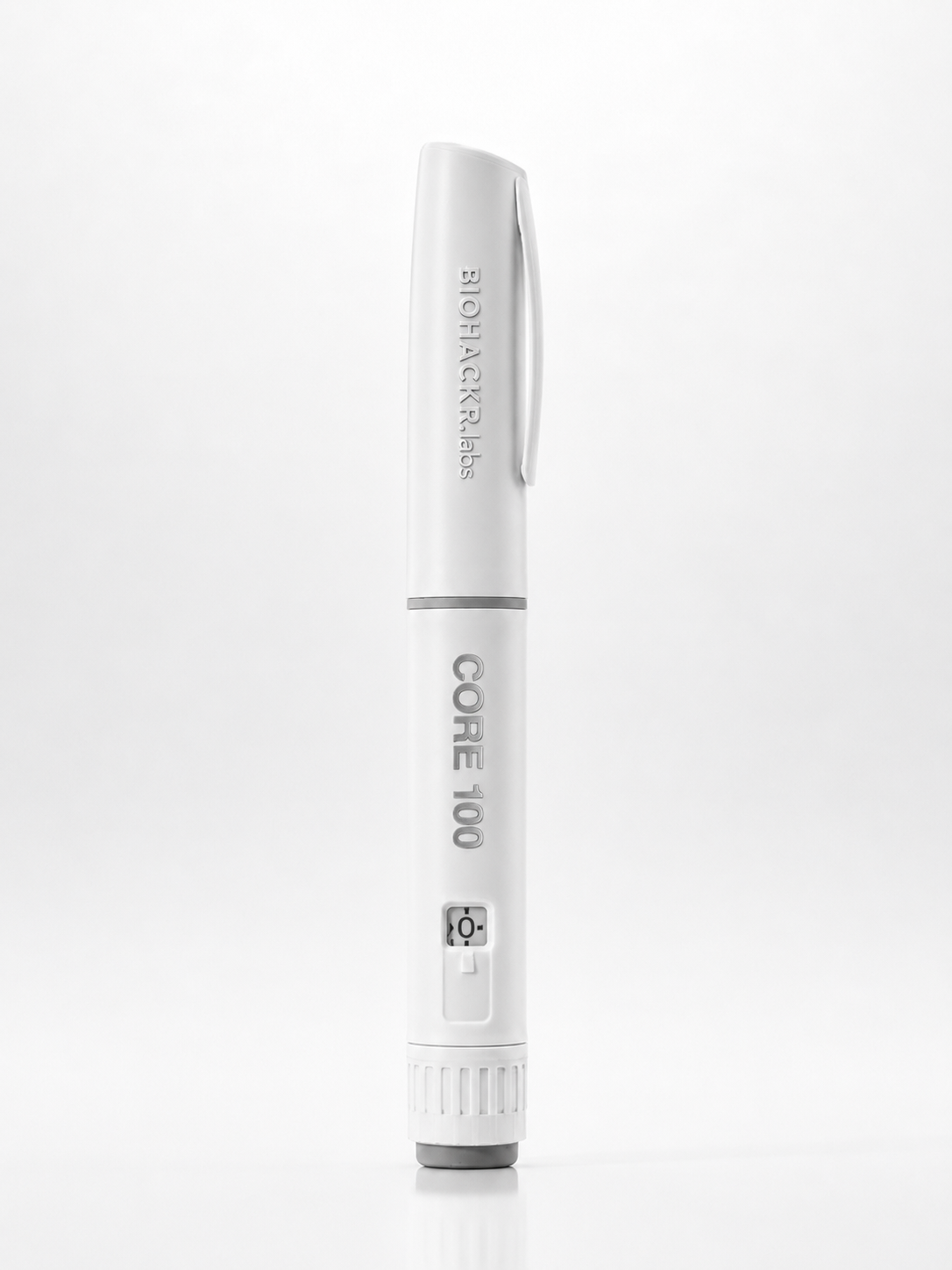
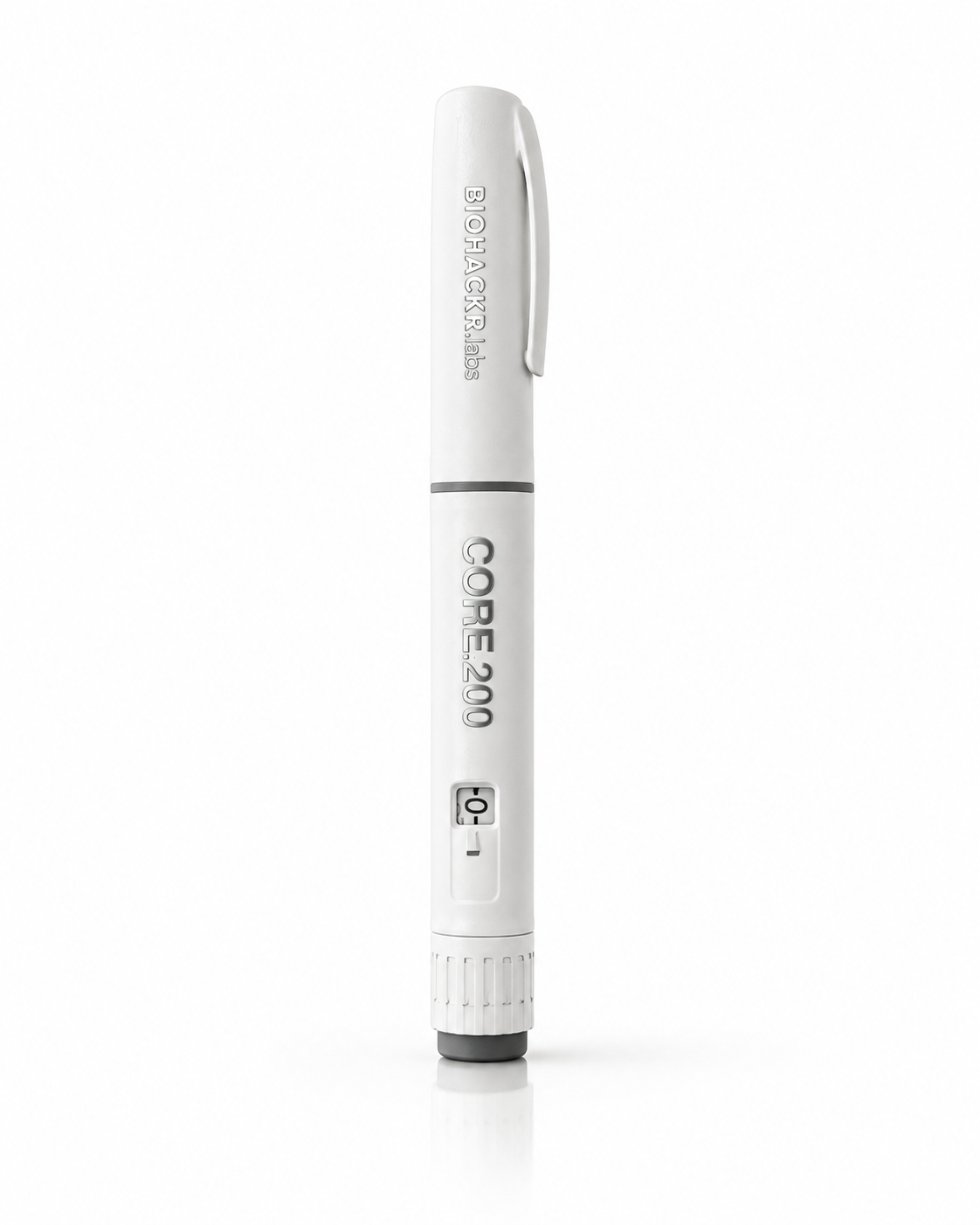
The CORE formulas are built around Super Bimix: Papaverine 30 mg/mL Phentolamine 2 mg/mL This is the cleanest formula architecture in the range. CORE is designed for men who want a stable, controlled, alprostadil-free option. It uses the two-agent Bimix logic: smooth muscle relaxation plus reduced constrictive vascular tone. The strength of CORE is not that it tries to be the most aggressive formula. Its strength is restraint. CORE is the stable platform. It is suited to men who may not require the added intensity of alprostadil, who want a cleaner vascular profile, or who may be sensitive to the discomfort sometimes associated with prostaglandin-based formulas. It also has a practical advantage: because CORE does not contain alprostadil, its handling profile is different from the Trimix-based formulas. In the Biohackr.Labs range, CORE 100 and CORE 200 do not require the same strict cold-chain logic as the alprostadil-containing formulas. Refrigeration remains useful for hygiene and bacterial-risk control, but the formula itself is not fragile in the same way as alprostadil-containing products. That makes CORE especially relevant in Southeast Asian logistics, where room temperature, courier timing, and real-world travel conditions matter. CORE is not the “weaker” choice. CORE is the cleaner choice. For the right user, that may be exactly the point.
CORE 100 and CORE 200
CORE 100 and CORE 200 share the same Super Bimix formula. The difference is format and total capacity. CORE 100 is the more compact 1 mL format. CORE 200 offers more total volume in a 2 mL format. Both sit in the stable-performance category. The logic is simple: begin with a clean vascular system before assuming that more ingredients are necessary. This is particularly important for men who are new to intracavernosal performance support. The first priority is not to chase maximum intensity. It is to understand response. CORE gives that conversation a controlled starting point.
CORE+: The enhanced Trimix platform
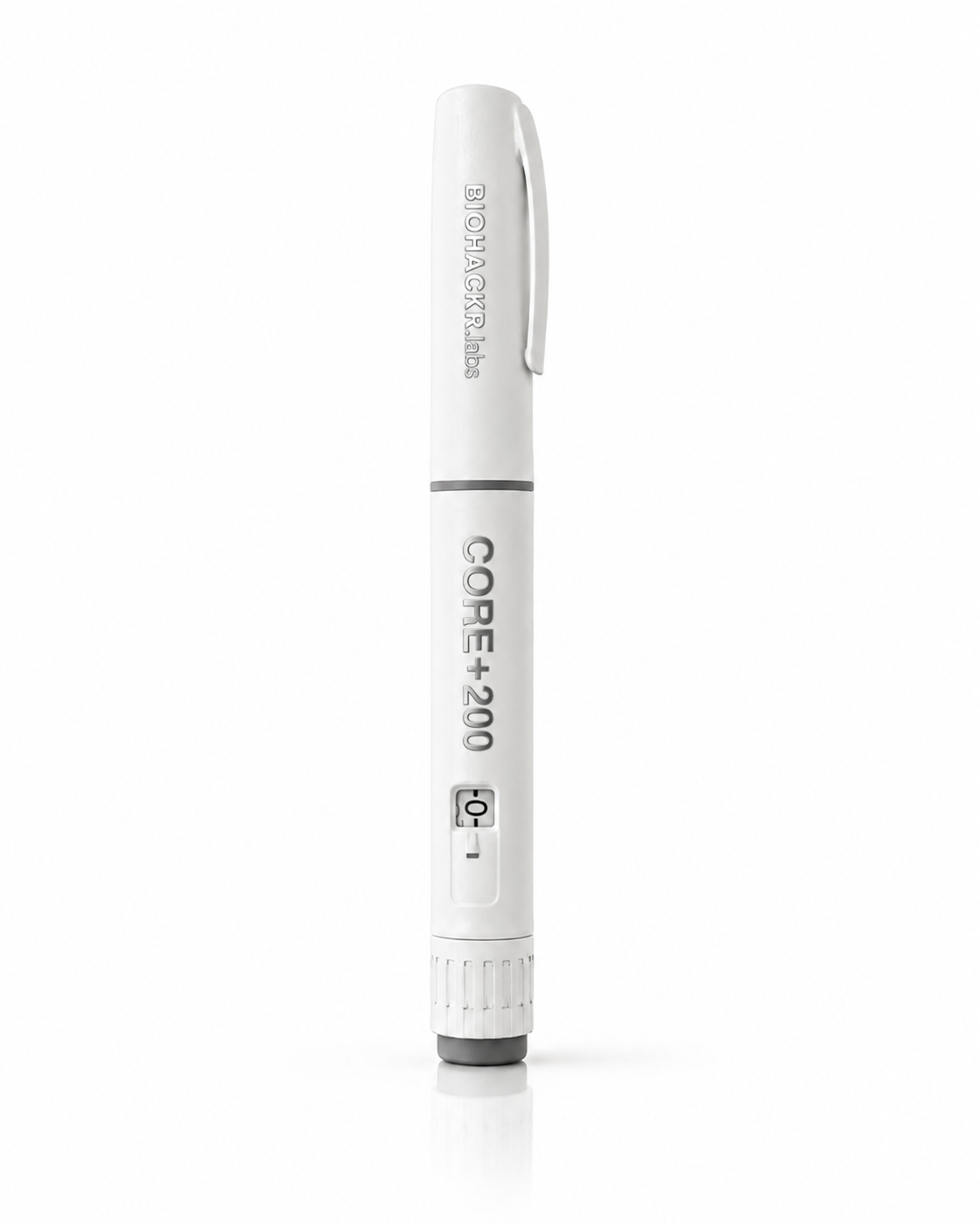
CORE+ moves into Super Trimix territory: Papaverine 30 mg/mL Phentolamine 4 mg/mL Alprostadil 30 mcg/mL This is where the Biohackr.Labs range adds the third pathway. CORE+ is built for men who need more than the Bimix architecture can provide. The phentolamine level is higher than in CORE, and alprostadil is introduced to create a more layered vascular signal. This makes CORE+ the enhanced-performance tier. But again, the word “enhanced” should not be misunderstood. It does not mean every man should skip CORE and go straight to CORE+. It means CORE+ offers a broader mechanism for men who need additional support. In practical terms, CORE+ may be better suited to men who have had inconsistent results with lighter support, who need more reliable firmness, or who already know that a Bimix-style approach is not enough. The trade-off is that CORE+ contains alprostadil. That means temperature handling, sensitivity, and response control become more important. For some men, the extra pathway is exactly what makes the formula work. For others, it may be more than they need. CORE+ is not “better than CORE.” CORE+ is more layered than CORE. That distinction is the foundation of informed choice.
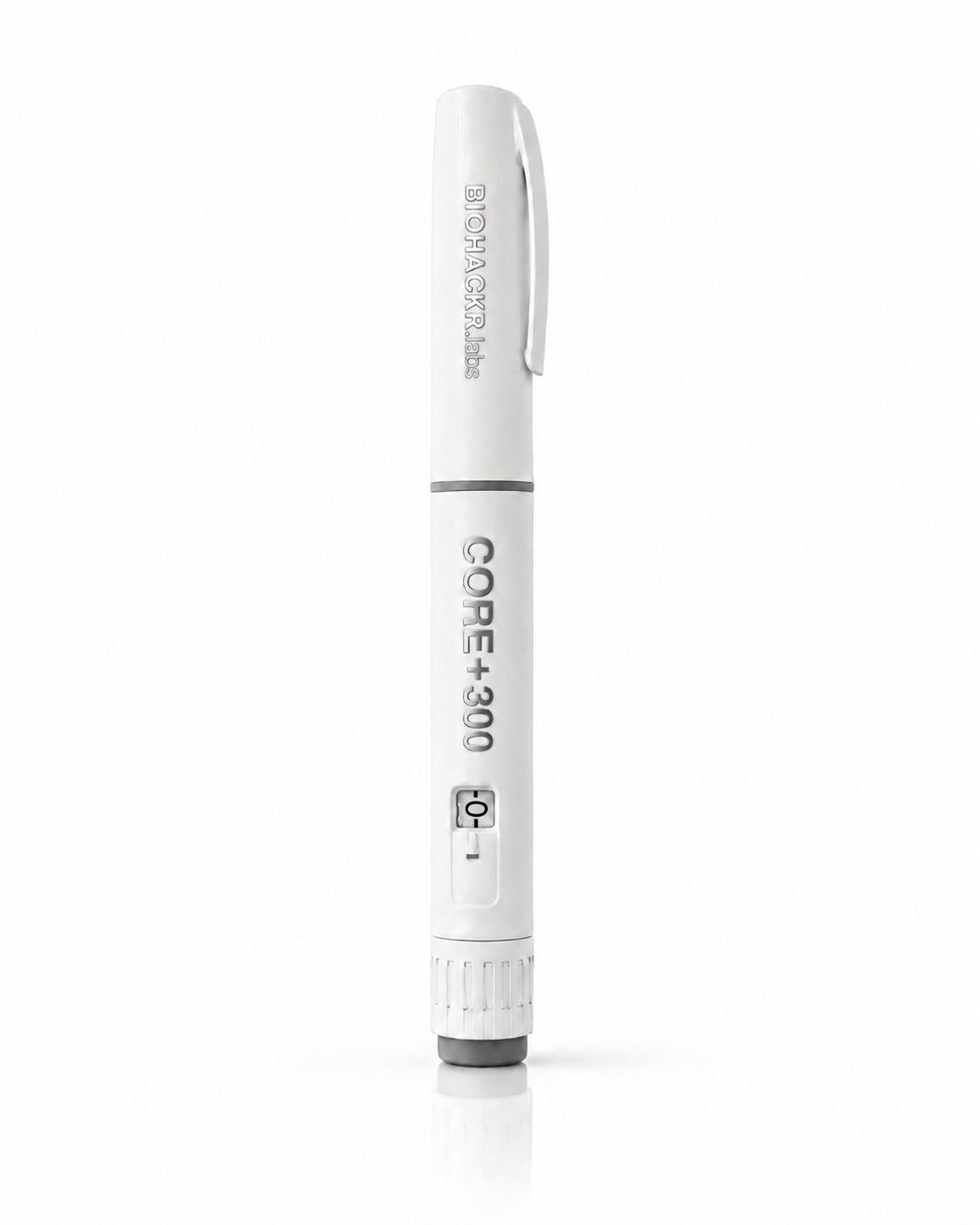
CORE+ 200 and CORE+ 300
CORE+ 200 and CORE+ 300 share the same Super Trimix formula. The difference is format and total volume. CORE+ 200 offers the enhanced Trimix architecture in a 2 mL format. CORE+ 300 offers the same formula family in a larger 3 mL format. This is the point in the range where the user is no longer choosing only formula intensity. He is also choosing how much total formula access he wants within that tier. For men who already understand their response, this matters. The formula is the engine. The format is the fuel tank.
ULTRA: The advanced Trimix architecture
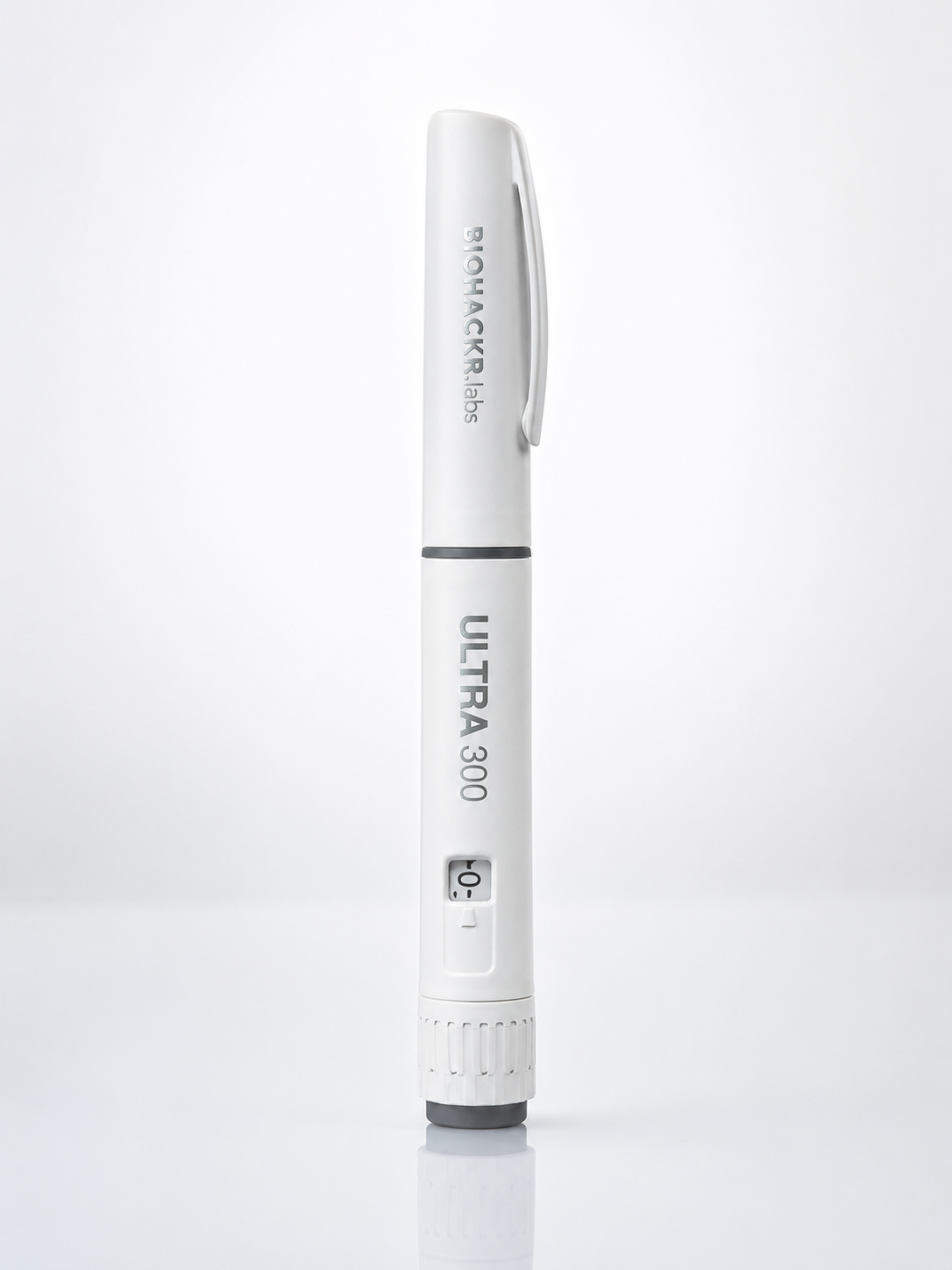
ULTRA is the most advanced formula in the Biohackr.Labs CORE range: Papaverine 30 mg/mL Phentolamine 6 mg/mL Alprostadil 60 mcg/mL ULTRA is built on Ultra Trimix. It increases the phentolamine level and doubles the alprostadil concentration compared with CORE+. This is not positioned as the default choice. It should not be treated as a trophy product, a status product, or a “strongest is best” product. ULTRA is for cases where a more assertive vascular architecture is justified. It is the high-performance end of the range, designed for men who require a stronger, more multi-layered formula and who understand that more force requires more respect. The metaphor here is not a louder speaker. It is a more sensitive instrument. ULTRA can deliver a more powerful signal, but that signal needs to be matched to the user’s physiology, tolerance, and performance goal. For the right user, ULTRA may be the most appropriate option. For the wrong user, CORE or CORE+ may be smarter. That is why Biohackr.Labs does not frame the range as a simple good-better-best ladder. It is a suitability ladder.
The Biohackr.Labs logic: choose architecture, not ego
The mistake many men make is assuming that the strongest product is the most masculine choice. That is not performance intelligence. That is ego purchasing. The more sophisticated approach is to ask: How much vascular support do I actually need? Do I respond well to a cleaner Bimix formula? Am I sensitive to alprostadil? Do I need a more layered Trimix architecture? Is my priority stability, intensity, duration, comfort, or predictability? Do I understand the handling requirements of the formula I am choosing? This is where the Biohackr.Labs range becomes more than a product list. It becomes a decision system. CORE is the stable Bimix foundation. CORE+ is the enhanced Trimix platform. ULTRA is the advanced Trimix architecture. Each tier exists for a reason. The goal is not to push every man upward. The goal is to help him choose the level of support that matches his actual physiology and performance context.
Final perspective: performance is not volume. It is control.
Bimix and Trimix are often discussed as if the only question is potency. That misses the point. The real subject is control. Control of vascular response. Control of duration. Control of comfort. Control of logistics. Control of risk. Control of expectations. Bimix offers a cleaner, alprostadil-free pathway for men who respond well to two-agent vascular support. Trimix offers a more layered pathway for men who need additional signal strength through the prostaglandin route. Biohackr.Labs translates that landscape into a structured private protocol range: CORE, CORE+, and ULTRA. Not one formula for everyone. Not stronger for the sake of stronger. A controlled ladder of vascular-performance architecture, built to help men make an informed decision before they choose. Because in serious male performance medicine, the most intelligent formula is not always the most aggressive one. It is the one that fits.
References
- AUA Erectile Dysfunction Guideline
- Erectile Dysfunction: AUA Guideline
- MSKCC Penile Injection Therapy Guide
- EAU Sexual and Reproductive Health Guidelines
- Ribé et al. crossover study
- Sexual Medicine Reviews Trimix review
- current status of intracavernosal injection therapy
- NEJM alprostadil trial
- Biohackr.Labs
- CORE range