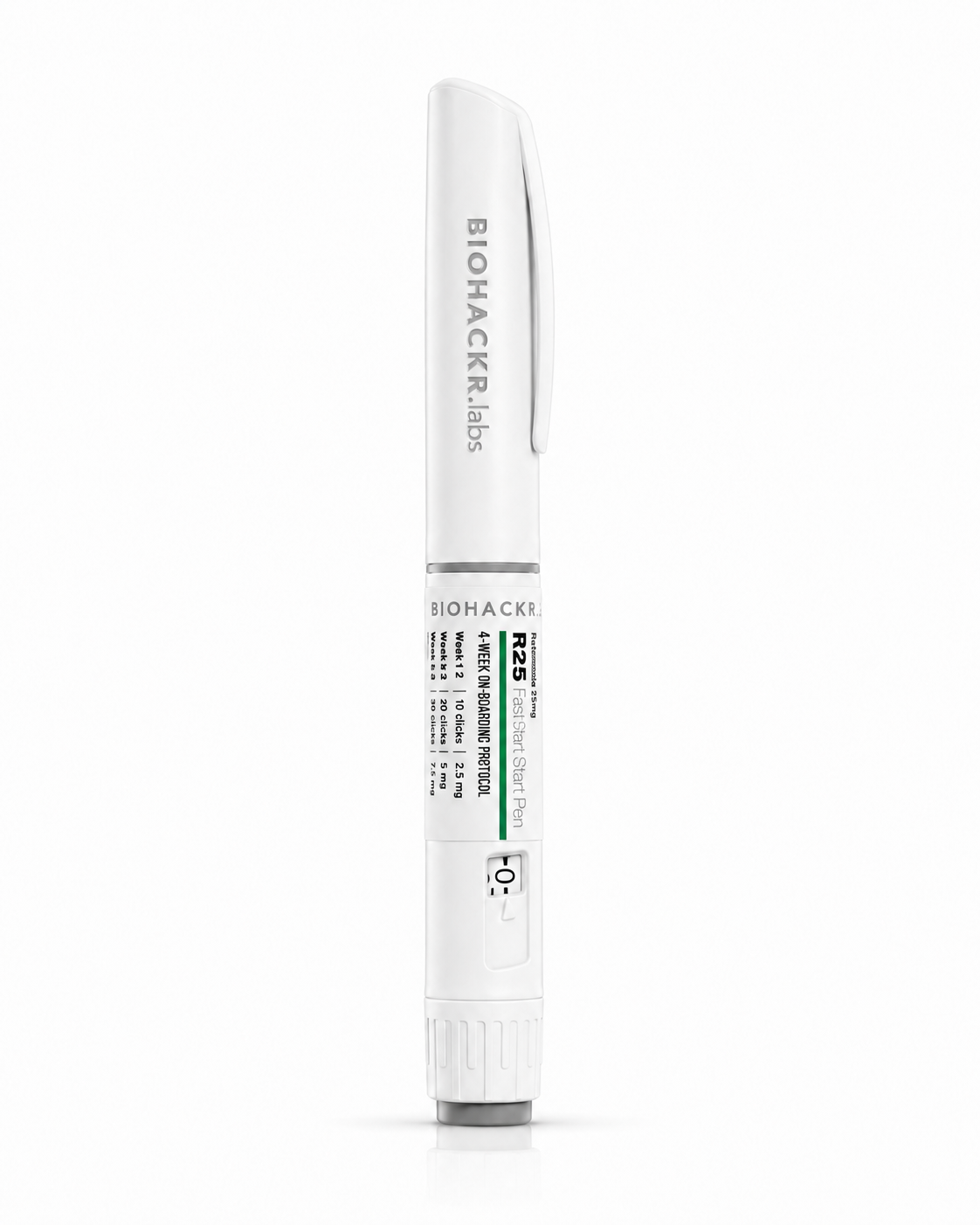
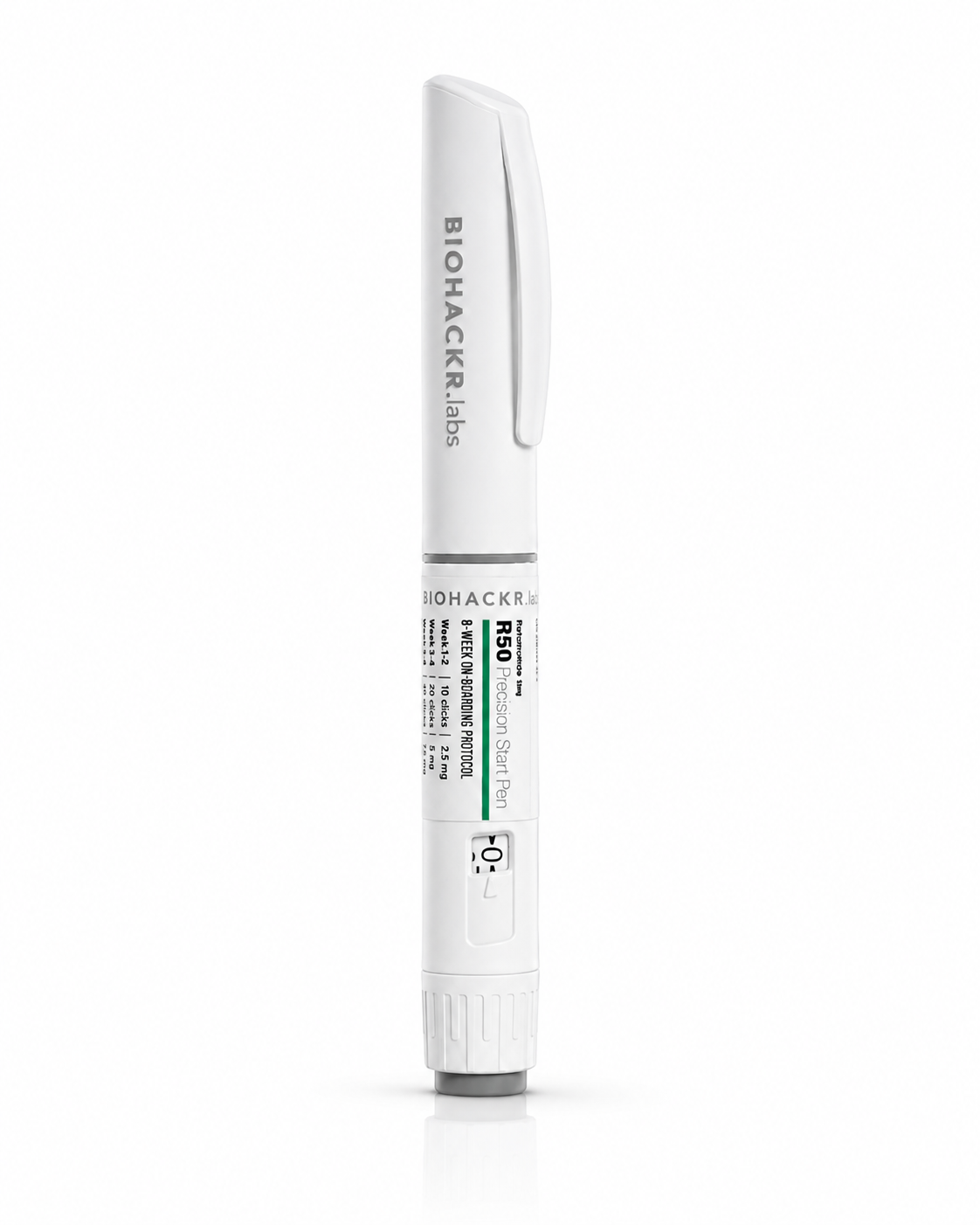
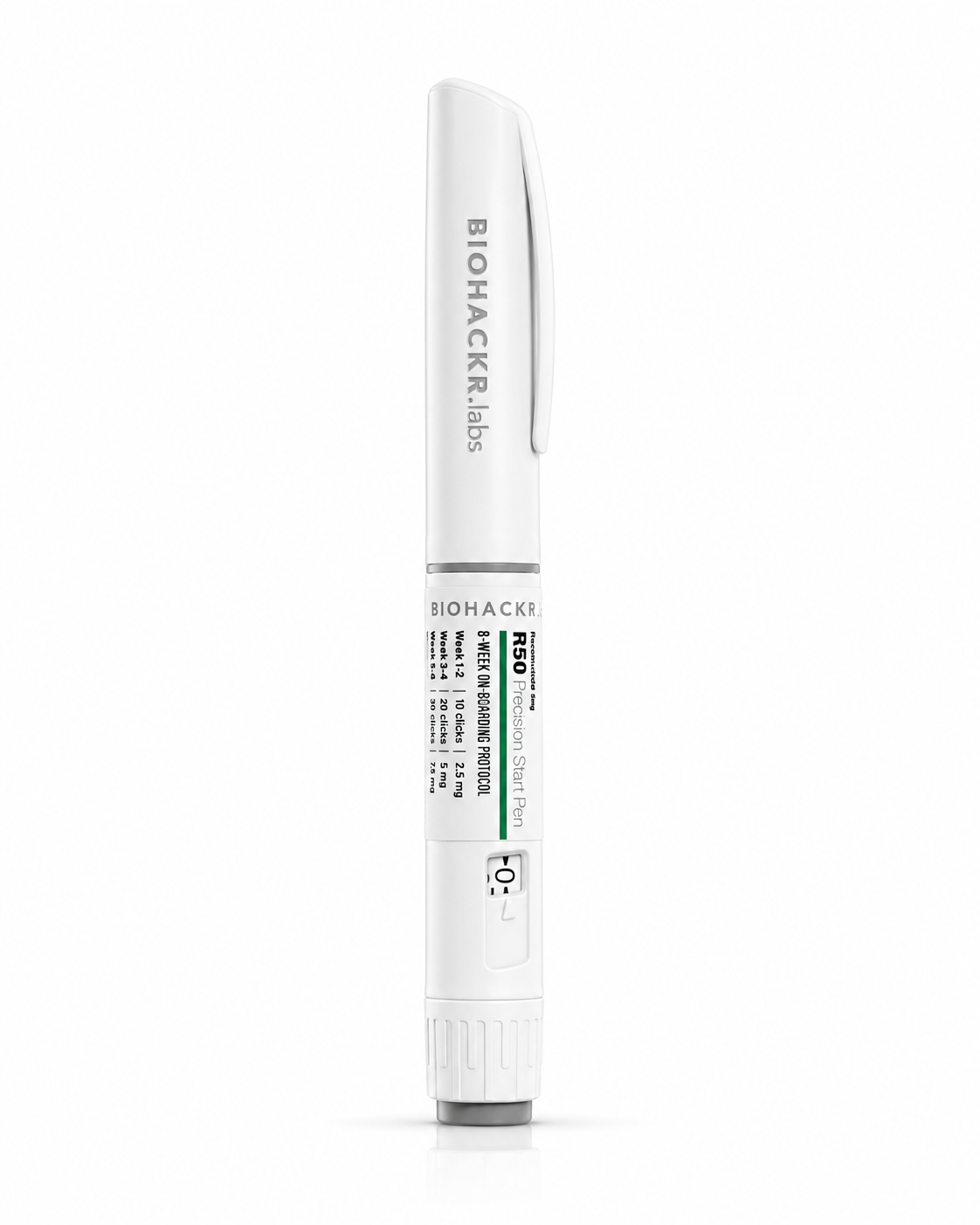
Retatrutide (LY3437943) is a synthetic once-weekly peptide developed by Eli Lilly and the first triple hormone receptor agonist to enter Phase 3 clinical trials. Where semaglutide activates one receptor and tirzepatide activates two, retatrutide simultaneously activates three: GLP-1, GIP, and glucagon — compounding their distinct mechanisms into a single weekly dose.
What receptor agonism means in practice
A receptor agonist mimics a naturally occurring hormone by binding to its receptor and triggering the same downstream cellular response. GLP-1 agonists like semaglutide work by mimicking the GLP-1 hormone secreted after meals, reducing appetite and improving insulin sensitivity. Retatrutide extends this principle to two additional hormone receptors simultaneously — and the combination produces outcomes that are not simply the sum of each individual mechanism.
The three receptors and what each one does
GLP-1 receptor activation slows gastric emptying, suppresses hypothalamic appetite signals, and stimulates insulin release — the mechanism shared with semaglutide and tirzepatide. GIP receptor activation enhances insulin sensitivity in peripheral tissues and amplifies GLP-1 appetite suppression — the mechanism tirzepatide added over semaglutide. Glucagon receptor activation is unique to retatrutide among late-stage compounds: it directly stimulates the liver to burn stored fat through fatty acid oxidation, suppresses new fat synthesis, and increases basal metabolic rate — addressing energy expenditure rather than intake alone.
Why the triple mechanism produces different outcomes
The three receptor pathways are not additive — they are synergistic. Glucagon alone would raise blood glucose, but GIP's insulin-sensitising effect buffers this while amplifying the fat-burning signal. The result is a net metabolic effect that exceeds what any single or dual agonist can achieve, producing weight loss outcomes that in Phase 2 trials approached the outcomes seen after bariatric surgery in a subset of patients.
Where retatrutide sits in the incretin class
Retatrutide's Phase 2 trial (NEJM, 2023) demonstrated a mean weight loss of 24.2% at 48 weeks at the highest dose — significantly above the ~20% seen with tirzepatide in SURMOUNT-1 and the ~15% with semaglutide in STEP-1. The TRIUMPH Phase 3 program is confirming these outcomes across larger populations, with FDA submission anticipated 2026–2027 following full program readouts.