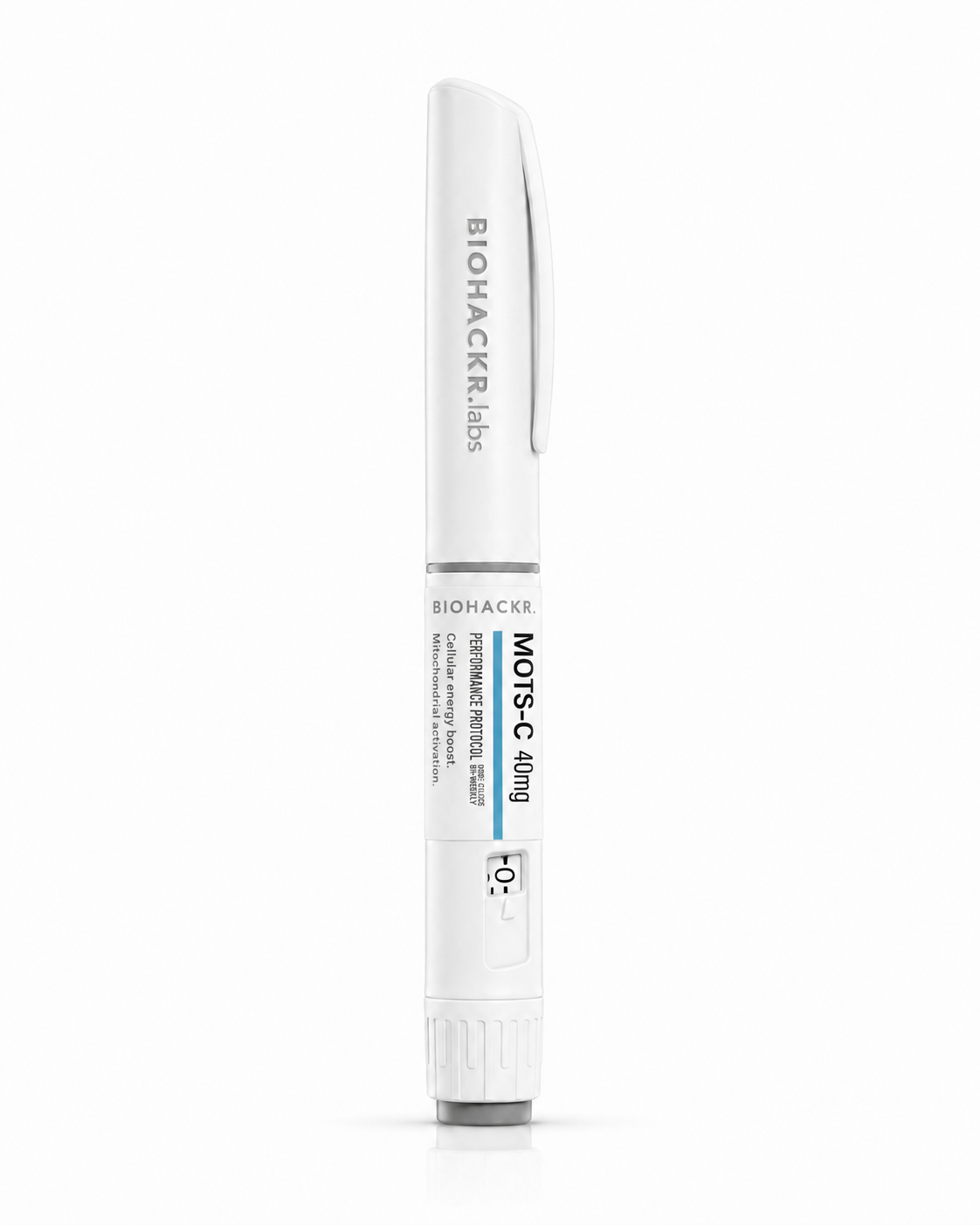
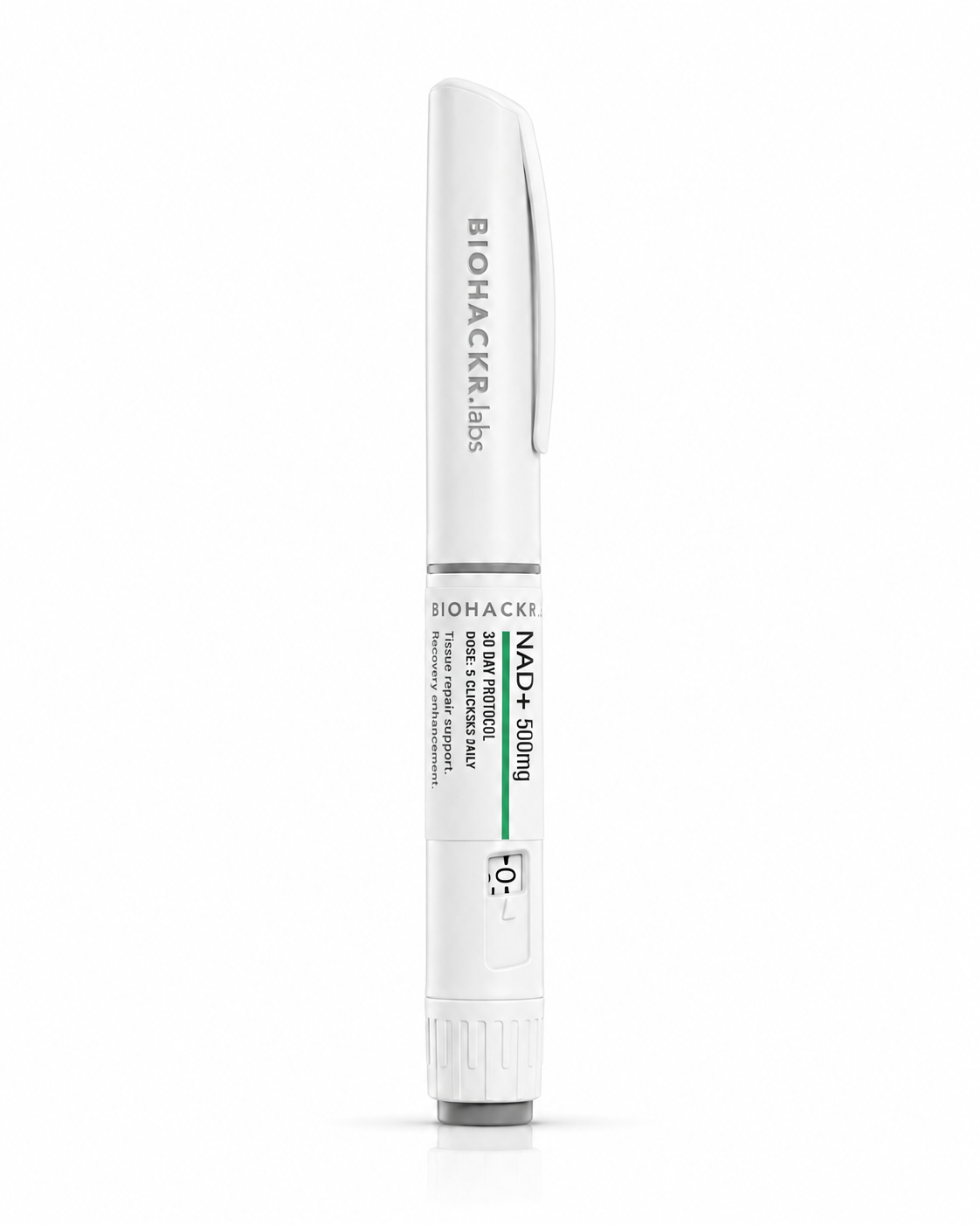
MOTS-c (Mitochondrial ORF within the 12S rRNA Type-C) is a peptide encoded within the mitochondrial genome and studied as a metabolic signal. NAD+ (Nicotinamide Adenine Dinucleotide) is not a peptide; it is a coenzyme central to metabolic redox reactions and is used by NAD-dependent enzymes including sirtuins, PARPs and CD38-related pathways. These mechanisms are established areas of biology, while clinical evidence for injectable NAD+ wellness protocols and combined MOTS-c/NAD+ outcomes remains limited.
MOTS-c: The mitochondrial messenger
MOTS-c is released from mitochondria under metabolic stress and travels to the nucleus and other tissues to regulate gene expression and metabolic adaptation. Its primary studied effects include AMPK pathway activation — a cellular energy sensor that promotes fat burning, glucose uptake, and mitochondrial biogenesis. MOTS-c has also demonstrated insulin sensitising effects in animal studies and has been proposed as a mediator of exercise-induced metabolic adaptation, with plasma levels rising during physical activity.
NAD+: The energy coenzyme and its decline
NAD+/NADH participates in the redox reactions that connect nutrient metabolism with cellular energy production. NAD+ is also consumed by enzyme systems including sirtuins, PARPs and CD38-related pathways. Age-associated changes in NAD+ biology are an active area of research, but the magnitude varies by tissue and study. N500 contains NAD+ itself, not NMN, and evidence from oral NAD+ precursors cannot automatically be transferred to injectable routes or this product format.
The combined FOCUS rationale
MOTS-c research focuses on mitochondrial signalling and metabolic adaptation, while NAD+ biology concerns redox metabolism and NAD-dependent cellular processes. Considering those layers together is a mechanistic framework, not evidence that the combination produces superior energy, cognition, longevity or anti-aging outcomes in humans.