The growth hormone axis is a cascade: the hypothalamus releases GHRH (Growth Hormone-Releasing Hormone), which signals the pituitary to release GH (Growth Hormone), which stimulates the liver to produce IGF-1 (Insulin-like Growth Factor 1) — the downstream mediator of most of GH's anabolic and recovery effects. PERFORM protocols target this axis at multiple points to support recovery, lean tissue maintenance, body composition, and metabolic function.
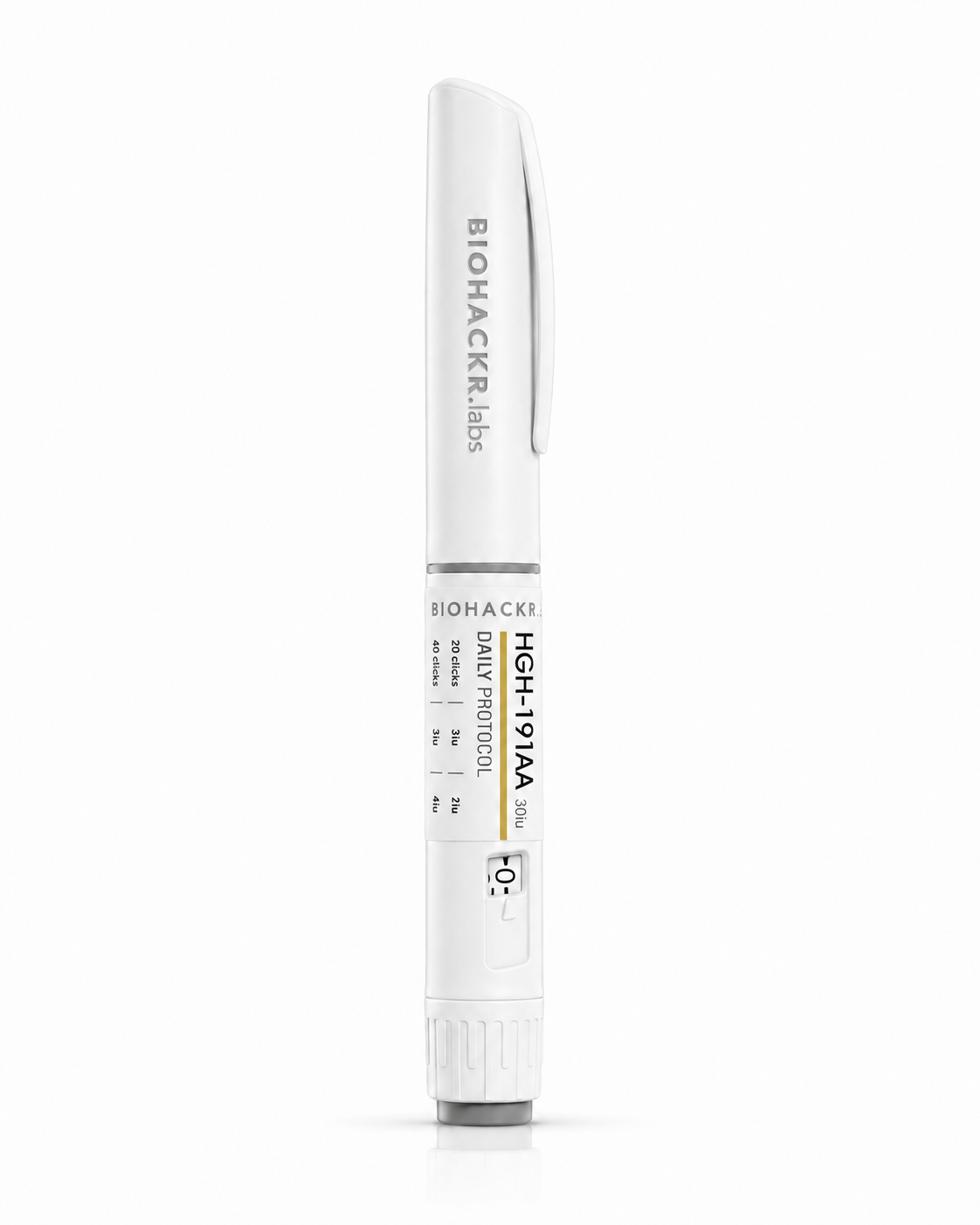
HGH 191aa: Direct growth hormone supplementation
HGH 191aa is recombinant human growth hormone with the full 191 amino acid sequence that matches endogenous GH. It acts directly on GH receptors in peripheral tissues and on the liver to stimulate IGF-1 production. The 191aa specificity matters: the full sequence maintains complete receptor binding fidelity, without the sequence truncations present in lower-specification preparations. Effects of supplemental GH include increased protein synthesis in muscle, lipolysis (fat mobilisation), cellular repair acceleration, and — at appropriate doses — improved sleep quality and recovery speed.
CJC-1295: The GHRH analogue
CJC-1295 is a synthetic analogue of GHRH — the hypothalamic hormone that tells the pituitary to release GH. Rather than supplementing GH directly, CJC-1295 stimulates the pituitary's own GH production, working within the body's natural pulsatile GH release pattern. This approach is often preferred for longer protocols because it preserves the natural feedback mechanisms that regulate GH levels, reducing the risk of the pituitary downregulation that can occur with direct GH supplementation. The IPA (Drug Affinity Complex) modification in the CJC-IPA pen extends the half-life significantly over native CJC-1295.
GHRP-6: The ghrelin receptor agonist
GHRP-6 (Growth Hormone Releasing Peptide 6) acts on ghrelin receptors in the pituitary and hypothalamus to produce a GH pulse — complementing CJC-1295's GHRH pathway with a second, independent signal. The combination of a GHRH analogue (CJC) and a GHRP creates a synergistic GH pulse significantly greater than either compound alone, mimicking the dual-signal mechanism the body uses to produce its own natural GH peaks during sleep. GHRP-6 also stimulates appetite through its ghrelin agonism — a relevant consideration for clients using the compound as part of body composition protocols.