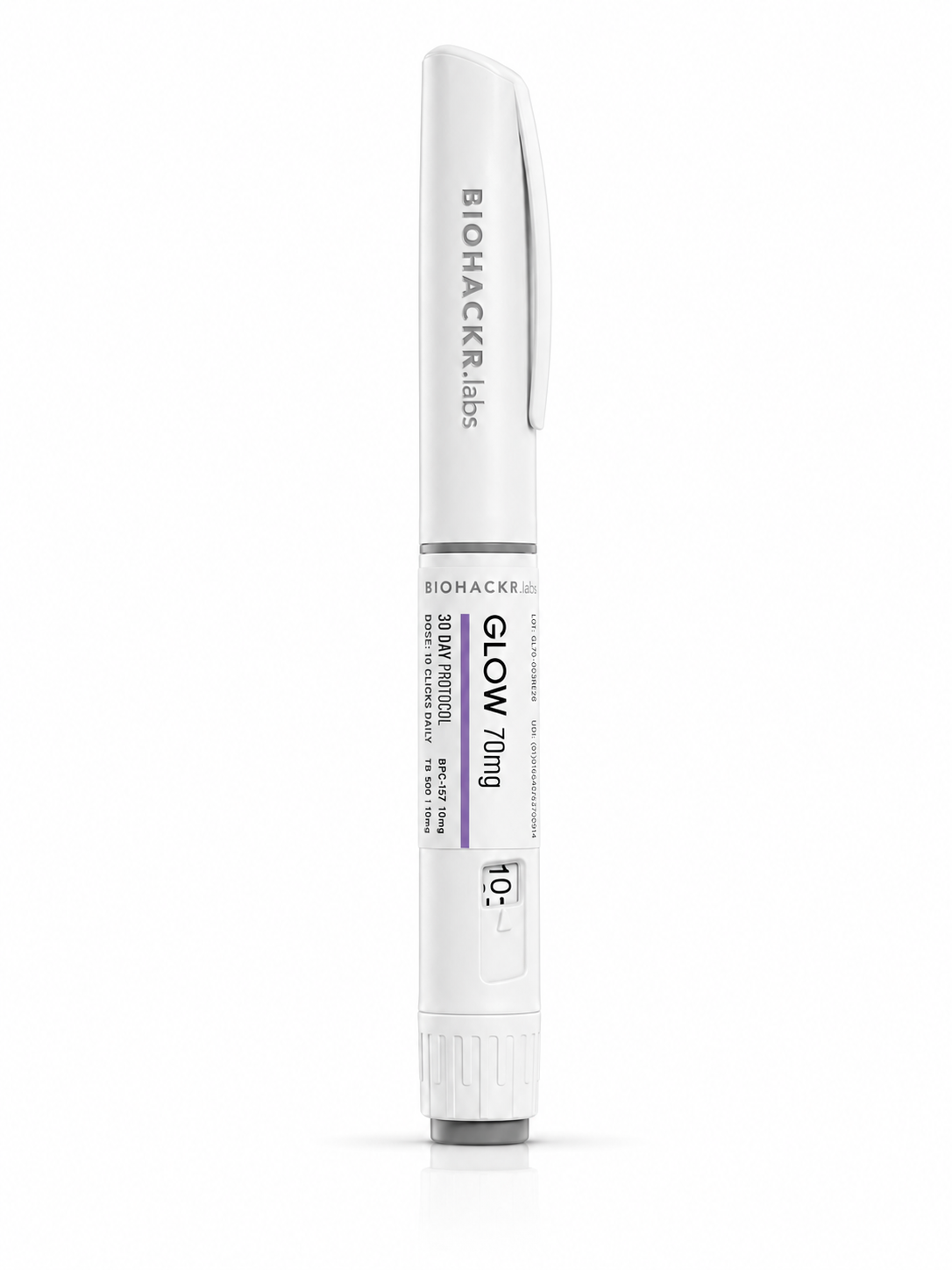
GHK-Cu (Glycine-Histidine-Lysine Copper) is a naturally occurring tripeptide-copper complex found in human plasma, saliva, and urine. Plasma GHK-Cu levels are highest in early life and decline with age — a decline that correlates with reduced skin regeneration capacity and slower tissue repair. Research into supplemental GHK-Cu has focused primarily on its ability to restore and accelerate this regenerative capacity in adult tissue.
The collagen and elastin mechanism
GHK-Cu's primary studied mechanism is the stimulation of fibroblast activity — the cells responsible for producing collagen, elastin, and glycosaminoglycans in the dermis and connective tissue. In vitro and animal studies demonstrate that GHK-Cu upregulates the genes encoding both collagen Types I and III, as well as elastin synthesis, producing measurable increases in skin thickness and firmness. The copper component is integral: it acts as a cofactor for lysyl oxidase, the enzyme that crosslinks collagen and elastin fibres to give structural tissue its tensile strength.
Antioxidant and anti-inflammatory effects
Beyond collagen synthesis, GHK-Cu has documented antioxidant activity through the superoxide dismutase (SOD) pathway — reducing oxidative damage to skin cells and slowing cellular ageing at the molecular level. It also modulates inflammatory gene expression, reducing the inflammatory signalling that contributes to dermal degradation and delayed wound healing. This anti-inflammatory profile makes GHK-Cu useful not only for aesthetic skin quality but for recovery from soft tissue injury.
What the research supports
GHK-Cu has a strong body of in vitro research and a smaller but growing clinical research base, primarily in dermatology and wound care. Studies demonstrate improved skin elasticity, reduced fine lines, and faster wound healing in controlled settings. The biohacking and longevity community has extended its use into systemic tissue quality, with anecdotal reports of improved skin quality and recovery that are consistent with the known mechanisms but extend beyond what controlled trials have formally confirmed.